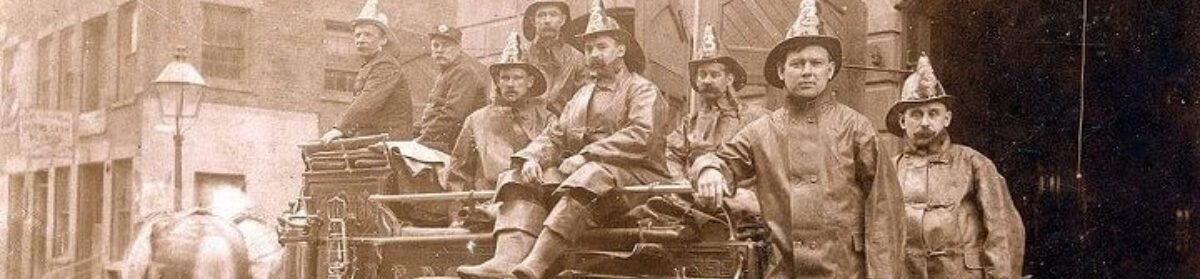
Old School Firefighter

by Sonia “Shaw” Aguirre, A.S., B.A., NRP

We belong outdoors.  Despite all the inventions that have made life easier for mankind, science continues to find that we thrive as humanity in the wild.  Out there, we find fresh water cleaned naturally by its natural flow, along with natural filtering materials like sand, gravel, charcoal, and clay; biological agents like beneficial bacteria and microbes, aquatic plants, and plant seeds; natural disinfectants and processes like sunlight and its ultraviolet radiation, increased oxygen flow from water and air movements, and wetlands which filter; and natural chemical processes like sedimentation from gravity’s effect on heavier contaminants, adsorption from soil and organic matter, and mineral purification from the natural minerals in the water. 

We find a fresh source of oxygen from being amongst the greenery like grasses, plants, and trees, and the aeration from waterfalls and wind currents.  We find healthy sources of food in wildlife living freely in the waters or on the land, consuming their natural resources.  When our country began, we were living outdoors more.  From within caves, beneath shelters made of greenery, inside shelters made of ice or animal skins, to eventually homes made and supported by wood, stone, and clay.  We prepared our food out in the open, using a variety of campfires to cook, keep warm, and take warm baths, and eventually transitioning to wood stoves, coal stoves, kerosene oil stoves, and gas stoves.  We began using wooden torches, oil lamps, candlelight, and gas lanterns to light our way at night.  And, from all this, began the fires…

Entering the Fire Service

In a small rural community in Texas in 1994, I, an 18-year-old gal, joined my local volunteer fire department, an all-male crew, fresh out of school, with barely a high school diploma, a license to drive, and a first aid and CPR card.  And then, I was immediately thrown into the fire, so to speak.  With absolutely no training, the fire calls started coming in.

Each time, my routine was the same: I drove to the station, looked around as everyone, including me, stripped down to our shirts and shorts, put on our bunker gear, and drove to the scenes.  It was all on-the-job training as we pulled up to the scenes, heavy black smoke billowing out, large red and orange flames heating up the area, trying to reach you or your crew or its occupants and incinerate everything it touched faster than you could extinguish it.  The race was on to get to the fire hydrant, connect the fire hose, and charge the line, as others rushed to deploy the line.

Learning as an Old School Firefighter

It was always a rush, a rush to the front to be on the nozzle or to back up the firefighter at the front.  I loved the fall of the water upon us as we fought the flames and pushed our way in, just daring it to come at us.  Believe it or not, I was smiling, just so happy to be there making a difference. In one major structure fire, no one was available to support me, so I went to the rear. Being untrained, I looked down, and there were downed wires that had fallen from the commercial structure fire. I looked all around, and there was no one to ask if walking around amongst all this was safe.

No one was around.  I was in full gear.  I had a job to do, so I did my duty.  In the moment, I just thought, my bunker gear, my boots, they’ll protect me. I fought the fire alone from the rear for a bit, as everyone else was busy and we had limited volunteer firefighters.  I survived. Frequently, we prepped emergency landing zones for the military helos that supported the rural areas of the border community, where frequent motor vehicle accidents became multiple casualty incidents on the freeway due to vehicles being cramped with numerous unrestrained men, women, and children, often being ejected in every which direction.

Firefighter/Paramedic Aguirre, 2001, Clint Fire Department (TX) under the late Fire Chief Armando “Mike” Terrazas

There were also the water rescues along the Rio Grande River, where, believe it or not, despite the desert community, hypothermia set in when the illegal immigrants would attempt to hide in the water for extended periods of time, worsening their drowning risk.  Of course, there were the CPR saves, the occasional ambulance fire, and the patrol vehicle accidents and rescues.  The jaws of life were fun!

The Spirit of Volunteer Firefighting

Looking back, this sounds like a comic book story, but it all did happen. Those were the days. We were all volunteers, there because we loved what we did, especially the learn-as-you-go environment.  I literally had a blast; though it cannot be advocated as standard anymore, I can say nothing beats falling in love with the job of firefighting except in the way I came into it.

FF/Paramedic Aguirre assisting El Paso Fire Department’s (TX) Certified Fire Investigators and their Arson Dog, who provided mutual aid to the Clint Fire Department at a structure fire that was a total loss. (2001)

I never did get a chance to become an officially certified firefighter, but I would do it all over again just the way I did.  If you need to remember why you became a firefighter, go serve with a rural volunteer fire station in small-town USA, where no paid services are available. Like I said, we belong outdoors…or maybe it’s just us “firefighters” now. Unforgettable!

Here’s to all of us and courage under fire…

[Standing Outside the Fire (1993) by Garth Brooks]

About the Author
sonia shaw aguirre
Paramedic Aguirre
Franklin County Fire EMS (VA)
under Fire Chief Michael A. Fowler

Greensboro Fire Department Historians Save History One Interview at a Time


In the fire service, every call, every shift, and every story matters. But what happens when those stories fade—when the voices behind them retire, relocate, or pass away? 

In Greensboro, NC, a dedicated group of firefighters has answered this call with a sense of urgency.  They recognize that fire department history is perishable and, without deliberate action, invaluable stories risk being lost forever.

greensboro fire department

Here’s the way Retired Battalion Chief Larry Cockman put it in a February 2020 article in Firehouse Magazine: “There is definitely a void when a firefighter goes back to the firehouse after retirement and no one knows their name.” These irreplaceable stories risk fading into silence if they remain undocumented.

Stories That Matter in Greensboro

What began as a book project by the Greensboro History Book Committee evolved into something far more dynamic: a series of video interviews, capturing the voices and experiences of retired firefighters. Retired Captain Harold Haynie and active-duty firefighter Lamar Sullivan joined Cockman in this effort. As of February 2020, the team had conducted 18 interviews, comprising dozens of hours of audio-visual history, and plans were in motion for 45 more.

Fast forward to 2025: The history book committee has evolved into a nonprofit organization, the Greensboro Firefighters Historical Society.  The group of historians has now interviewed 92 retirees from the Greensboro Fire Department, representing more than 2,700 years of combined service and institutional memory.

Reflecting on the project, Cockman shared with Firehouse Magazine that one of his favorite experiences while witnessing the retirees’ reactions:  “I can see their happiness as they recount their days in the fire service.  .. We ask them about 26 questions … their memories, both good and bad, about their experiences on and off the job.  They tell us about the hardest calls they’ve been on and some of the pranks they’ve pulled on one another.”

The NFHC Applauds This Undertaking

At the National Fire Heritage Center, we echo this urgency. Whether you are part of a volunteer company or a municipal fire department with centuries of service or a newly formed department building its legacy, your history matters. It deserves to be remembered, studied, and shared.

The National Fire Heritage Center applauds Chief Cockman, Captain Haynie, and Firefighter Sullivan of the Greensboro Fire Department for recognizing the critical need to save the fire service’s rapidly vanishing history and for taking concrete steps to archive the department’s past.

Let’s follow their lead and preserve the past before the memories are gone and the stories are lost.  Don’t wait until it’s too late. 

Chief Larry Cockman, Greensboro Fire Department

Biographical Note: Larry Cockman was the chairman of the committee. He served as Driver/Engineer, Rescue Squad, Captain, Battalion Chief, and Assistant Chief. I retired with 32 years of Service as Battalion Chief. I have a BS in Fire Administration from the University of Maryland and was selected as North Carolina State Firefighter of the Year in 1987.

Editor’s Note — Be sure to check out the Greensboro Firefighters’ Historical Society page, where the committee has posted its video recordings of the interviews. Here’s the link to the archived interviews. The site also has excellent information on the Greensboro Fire Department’s history.

Currently, Larry and the committee are actively recording the department’s history, and he would be pleased to pass on advice to others working on or considering their own historical projects.
Contact Larry Cockman at:
Email: lcockman@hotmail.com
Phone: 336-509-6674

Fire Service History: A Journey in Time by Chief Shelton

fire service history Wilie Shelton
NFHC Vice President of Operations & Treasurer provides a report at the 2024 National Fire Heritage Center annual meeting.

Willie Shelton, Jr., Vice President of Operations and Treasurer at the National Fire Heritage Center, delivered an informative talk about fire service history as the guest speaker for the 2025 installation of Officers and Ladies Auxiliary at the Colonial Beach Volunteer Fire Department on Saturday, January 18, 2025.

Drawing from his remarkable five-decade fire department career, Chief Shelton presented a comprehensive and engaging historical timeline of the Service. His remarks highlighted the tremendous advances in the field and the mounting challenges facing modern fire departments,  underscoring the increasing costs of operating fire departments across the Commonwealth of Virginia. Additionally, he addressed the significant challenges of recruiting and retaining dedicated volunteers, which remain a critical issue alongside funding concerns.

Chief Shelton’s distinguished career in the fire service spans over five decades. After serving 31 years as the Chief of the Fort Belvoir Fire Department, he became the Executive Director for the Virginia Department of Fire Programs, retiring after 14 years of dedicated service to the Commonwealth. He has also volunteered for Stafford County Fire & Rescue for over 50 years and currently serves as the Planning Commissioner for Stafford County.

His comprehensive analysis offers unique perspectives of a veteran fire service leader and perspectives on both the proud heritage of American firefighting and the path forward for this essential public service.